Back to drinks

Cocktail

Long Island Iced Tea

Five small spirit measures form the IBA classic. We specify 30 ml cola for a repeatable top-up. Despite the name and tea-like colour, it contains no tea.

Mixed spirits · Citrusy · Sweet

4 min1 ServingHighball

Ingredients

Ice and water are assumed. Add everything else you have.

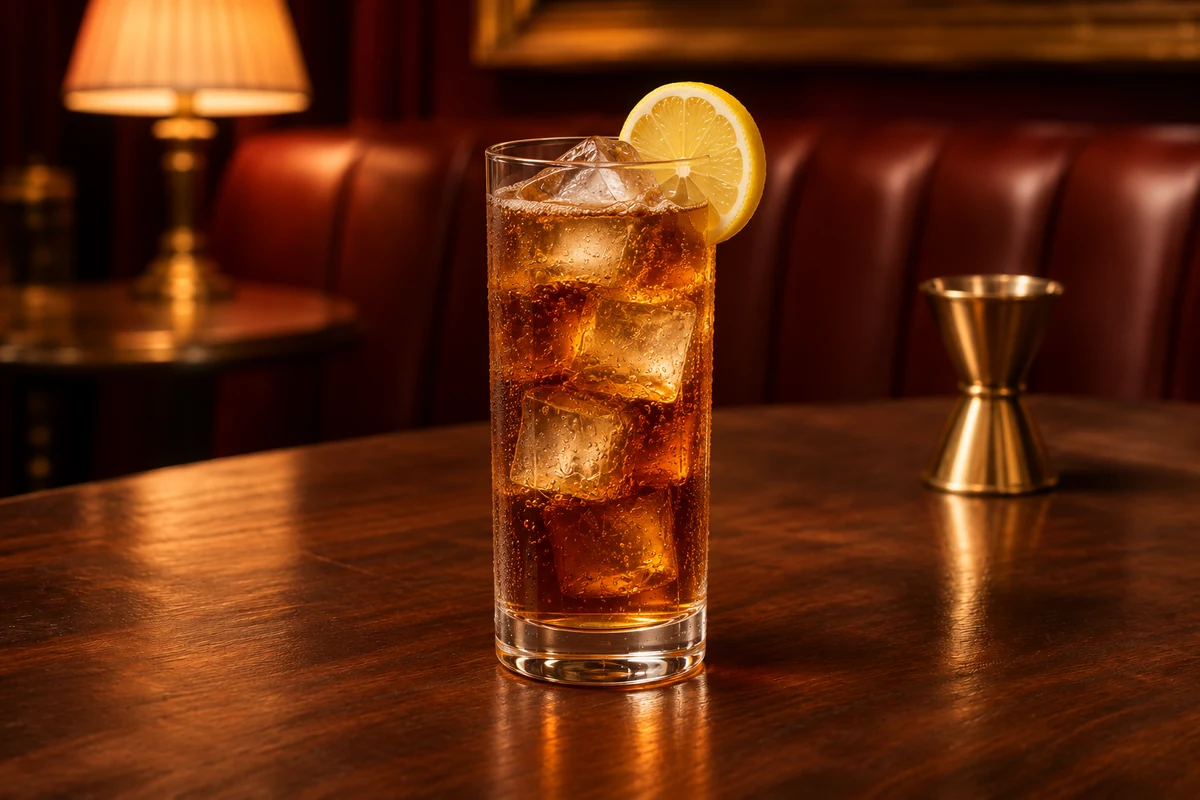
Long Island Iced Tea · Highball
AI-generated illustration

Method

Build

Equipment: Jigger or measuring spoon · Bar spoon

  1. Fill a tall glass with ice. Measure in each spirit, then the lemon juice and syrup.
  2. Add the cold measured cola and stir gently from the bottom.
  3. Add a lemon slice if using. Keep the measures small and exact.

A small detail

Use 1:1 syrup. Extra cola lowers concentration but does not remove alcohol; this recipe already contains 75 ml of spirits and liqueur.

Estimated strength

Medium

Per serving: Estimated served ABV: ≈ 17% · Pure alcohol: ≈ 23.7 g alcohol · Added water from ice: 10% · 176 ml estimated liquid. An estimate, not a measurement. Dilution lowers concentration but does not remove alcohol.

Check your bottle label. These typical alcohol levels can vary by brand and market. Water added as a percentage of the measured liquid before mixing. Ice melt varies with temperature, time and technique.

Plan for a party

Prep the base

Measure the base ahead. Fresh additions and the final mixing happen per glass.

Guests: 6

Measure the base ahead. Fresh additions and the final mixing happen per glass.

One recipe serving per guest. Choose the amount you want to prepare.

Base only: 630 ml · Per serving: 105 ml. Use a container larger than the volume shown; allow room for fruit and stirring.

Prepare the base

  • 90 ml Vodka
  • 90 ml Blanco tequila
  • 90 ml White rum
  • 90 ml Gin
  • 90 ml Triple sec
  • 180 ml Simple syrup (1:1)

Keep separate for serving

  • 150 ml Lemon (fresh juice)
  • 180 ml Cola

Optional garnishes · Optional

  • 6 pieces Lemon (slice, for garnish)

Water for the batch

No pre-added water. Chill the ingredients, build over fresh ice and add the cold sparkling mixer last, except where the original recipe specifies a different order.

Prepare and serve

  1. Measure the base ingredients into a clean, covered container and stir to combine. Keep the quantities in the serving section separate.
  2. Prepare for today’s service. Label and refrigerate the covered base; follow ingredient storage labels. Keep ice out of the container and chill the glasses before serving.
  3. For each glass, use 105 ml of base in place of those ingredients in the original method. Add the separate ingredients at their per-serving amounts. Do not measure the base ingredients a second time.
  • Prepare fresh juice close to serving and keep it chilled separately unless it is explicitly in the base. Fresh batches are for this service, not an overnight storage promise.
  • Keep fizzy drinks cold and closed until pouring. Add them per glass; never shake or blend them.

The list saves ingredient names, not party quantities. Check the totals above against how much you have. Garnishes and ice are not added.

Bartender sources: Campari Academy: batching techniques · Dave Arnold: measuring dilution and batching · Simon Difford: water and dilution · Jeffrey Morgenthaler: batch calculator
Variations & nearby recipes

Change the idea, keep the balance. Each option has its own measures and method.

Cuba Libre

Related recipe

A different recipe with a useful flavour or technique connection. This is not a claim that it is a historical variation.

Leaves out
Vodka, Blanco tequila, Gin, Triple sec, Lemon, Simple syrup (1:1)
Brings in
Lime

Use the full recipe below for the correct quantities, glass and method. This is not a one-for-one swap.

Recipe reference

Sources & inspiration

About this recipe

Recipes and house adaptations have source links. Measures, substitutions and estimated strength are explained separately. Images are AI-generated illustrations.

We do not claim every recipe has been physically tested. Community reviews are moderated user reports, separate from recipe sources.

Suggest a correction

The recipe collection