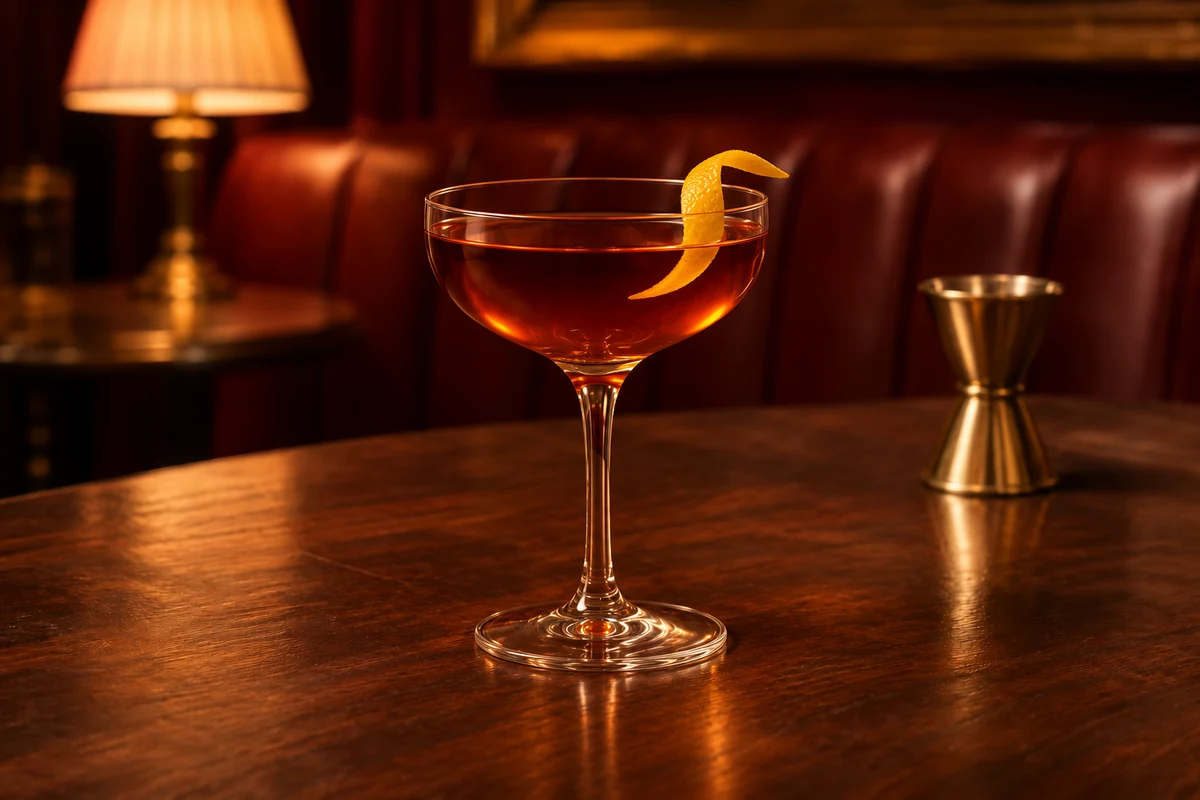
Combine, dilute and chill the batch. Finish each glass when serving.
One recipe serving per guest. Choose the amount you want to prepare.
Batch to pour: ≈ 698.4 ml · Per serving: ≈ 116.4 ml. Use a container larger than the volume shown; allow room for fruit and stirring.
Prepare the base
- 270 ml Gin
- 270 ml Sweet red vermouth
- 6 tsp Maraschino liqueur
- 12 dashes Orange bitters
Optional garnishes · Optional
- 6 pieces Lemon (peel, for garnish)
Water for the batch
This starting amount replaces ice melt during mixing. Test one serving and adjust before making the whole batch. It is not a measured result.
116.4 ml added water for 6 servings.
Make one serving using the original method. Weigh the liquid before ice, then strain completely and weigh again. The gain in grams is approximately the added water in ml. Liquid left on the ice makes this an underestimate. Taste the chilled sample, repeat if needed, and enter the water amount above.
Prepare and serve
- Measure the base ingredients into a clean, covered container and stir to combine. Keep the quantities in the serving section separate.
- Stir 116.4 ml chilled water into the base. This is in addition to any water already specified in the recipe.
- Prepare for today’s service. Label and refrigerate the covered base; follow ingredient storage labels. Keep ice out of the container and chill the glasses before serving.
- Pour ≈ 116.4 ml of the chilled, diluted batch into each chilled glass. Use an external ice bath to cool the closed container further if needed. Add garnish at service; do not repeat the original full stir or shake.
- Use the same bottle and consistent dashes. Dash sizes vary; the ml pour guide assumes about 1 ml per dash.
Pour volumes are approximate when dashes or dissolved sugar are included. Count recipe dashes consistently; measure your own bottle’s dash if you need greater accuracy.
The list saves ingredient names, not party quantities. Check the totals above against how much you have. Garnishes and ice are not added.
Bartender sources: Campari Academy: batching techniques · Dave Arnold: measuring dilution and batching · Simon Difford: water and dilution · Jeffrey Morgenthaler: batch calculator