Back to drinks

Cocktail

Sazerac

The IBA cognac version, served without ice in an absinthe-scented glass. A teaspoon of sugar replaces the sugar cube.

Cognac · Spirit-forward · Herbal

5 min1 ServingRocks glass

Ingredients

Ice and water are assumed. Add everything else you have.

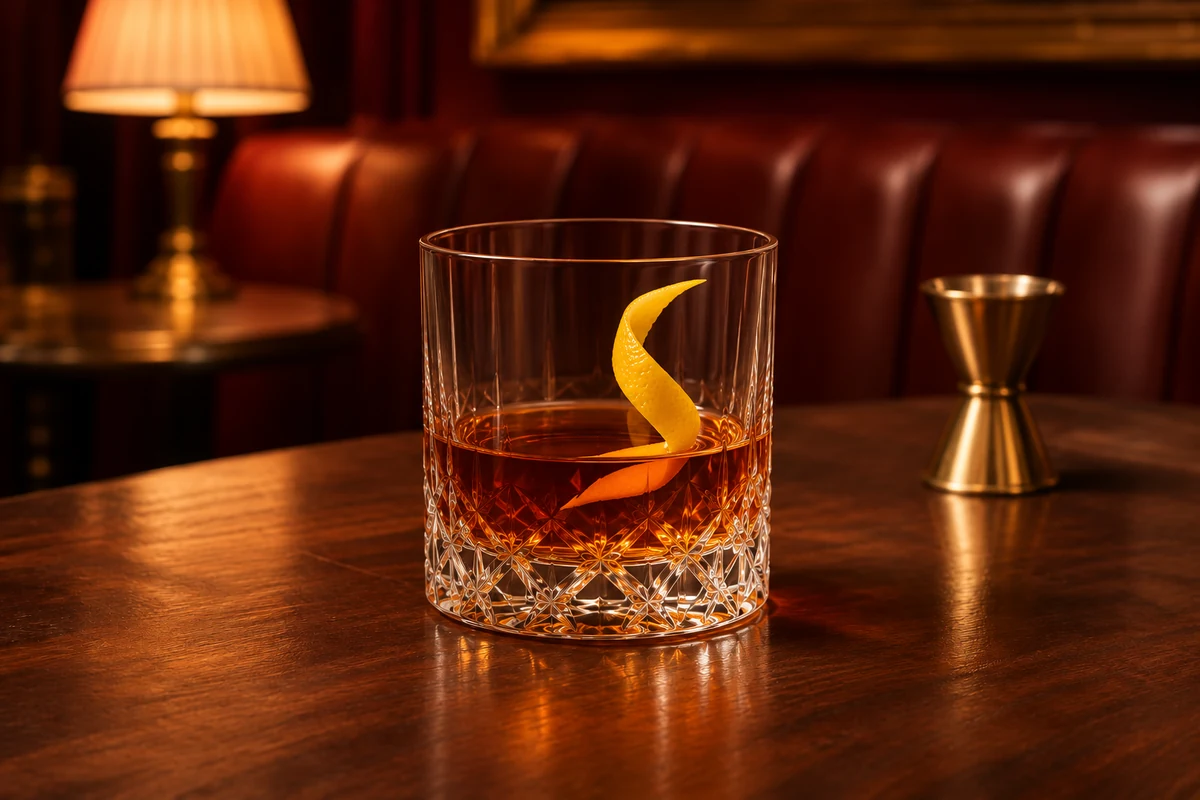
Sazerac · Rocks glass
AI-generated illustration

Method

Stir

Equipment: Jigger or measuring spoon · Mixing glass · Bar spoon · Strainer

  1. Chill a rocks glass, swirl the absinthe inside and discard the excess. Leave no serving ice in it.
  2. Dissolve the sugar with the bitters and 5 ml water per serving in a mixing glass. Add cognac and ice; stir for 20–30 seconds.
  3. Strain into the rinsed empty glass. Express the lemon peel over the surface if using.

A small detail

The rinse is not a full absinthe measure in the finished drink. Rye makes a distinct, familiar variation.

Estimated strength

Very strong

Per serving: Estimated served ABV: ≈ 30.1% · Pure alcohol: ≈ 17.7 g alcohol · Added water from ice: 20% · 74.4 ml estimated liquid. An estimate, not a measurement. Dilution lowers concentration but does not remove alcohol.

Check your bottle label. These typical alcohol levels can vary by brand and market. Water added as a percentage of the measured liquid before mixing. Ice melt varies with temperature, time and technique.

Plan for a party

Prep the base

Measure the base ahead. Fresh additions and the final mixing happen per glass.

Guests: 6

Measure the base ahead. Fresh additions and the final mixing happen per glass.

One recipe serving per guest. Choose the amount you want to prepare.

Base only: ≈ 357 ml · Per serving: ≈ 59.5 ml. Use a container larger than the volume shown; allow room for fruit and stirring.

Prepare the base

  • 300 ml Cognac
  • 6 tsp White sugar
  • 12 dashes Peychaud’s bitters

Water already in the recipe: 30 ml

Keep separate for serving

  • 60 ml Absinthe (glass rinse; discard excess)

Optional garnishes · Optional

  • 6 pieces Lemon (peel, for garnish)

Water for the batch

Keep the ice and water steps in the single-serving method. Scaling ingredients alone does not replace chilling or dilution.

Prepare and serve

  1. First dissolve the sugar with the recipe water and bitters. Then add the remaining base ingredients. Do not replace the sugar with an equal volume of syrup.
  2. Prepare for today’s service. Label and refrigerate the covered base; follow ingredient storage labels. Keep ice out of the container and chill the glasses before serving.
  3. For each glass, use ≈ 59.5 ml of base in place of those ingredients in the original method. Add the separate ingredients at their per-serving amounts. Do not measure the base ingredients a second time.
  • Dissolve the measured sugar as the original method describes before chilling. A teaspoon of sugar is not a teaspoon of syrup.
  • Use the same bottle and consistent dashes. Dash sizes vary; the ml pour guide assumes about 1 ml per dash.

Pour volumes are approximate when dashes or dissolved sugar are included. Count recipe dashes consistently; measure your own bottle’s dash if you need greater accuracy.

The list saves ingredient names, not party quantities. Check the totals above against how much you have. Garnishes and ice are not added.

Bartender sources: Campari Academy: batching techniques · Dave Arnold: measuring dilution and batching · Simon Difford: water and dilution · Jeffrey Morgenthaler: batch calculator
Variations & nearby recipes

Change the idea, keep the balance. Each option has its own measures and method.

Rye Sazerac

Published variation

Rye replaces the cognac in this established version, which the IBA also discusses. Keep the absinthe as a glass rinse, not a full pour.

Leaves out
Cognac
Brings in
Rye whiskey

Glass: Rocks glass

  1. Coat a chilled rocks glass with absinthe, then discard the excess.
  2. Dissolve the sugar with the bitters and a small splash of water in a mixing glass. Add rye and ice and stir until cold.
  3. Strain into the rinsed glass without ice. Express lemon peel over the surface.

Recipe reference

Sources & inspiration

About this recipe

Recipes and house adaptations have source links. Measures, substitutions and estimated strength are explained separately. Images are AI-generated illustrations.

We do not claim every recipe has been physically tested. Community reviews are moderated user reports, separate from recipe sources.

Suggest a correction

The recipe collection